
Sustainable & Climate-Resilient Gardening: Future-Proof Your Garden for 2026 and Beyond
Sustainable and climate-resilient gardening is no longer a niche trend – it is the defining shift shaping outdoor spaces in 2026. As weather patterns become increasingly unpredictable, traditional gardening methods that rely on constant watering, fertilisers, and rigid plant choices are rapidly becoming outdated.
Modern gardens are now designed to work with the environment rather than against it. This approach focuses on durability, efficiency, and long-term ecological balance. The result is a garden that thrives under pressure whether facing drought, heavy rainfall, or fluctuating temperatures, while requiring less maintenance and fewer resources.
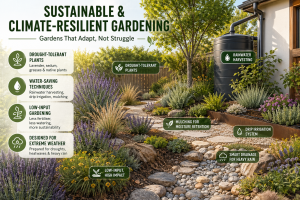
Why Climate-Resilient Gardening Matters More Than Ever
Extreme weather conditions are no longer rare events. Longer dry periods, sudden storms, and temperature swings are placing stress on traditional gardens.
A climate-resilient garden addresses these challenges by:
- Reducing reliance on artificial watering systems
- Minimising plant loss during droughts or floods
- Lowering maintenance costs and effort
- Supporting biodiversity and soil health
- Creating a self-sustaining outdoor ecosystem
Instead of constantly correcting problems, resilient gardens are designed to prevent them.
Choosing Drought-Tolerant Plants That Thrive Naturally
The foundation of a sustainable garden begins with plant selection. Choosing species that naturally tolerate dry conditions ensures long-term success with minimal intervention.
Popular drought-tolerant plants include:
- Lavender – thrives in dry soil and attracts pollinators
- Sedum – stores water in its leaves, ideal for low-maintenance beds
- Ornamental grasses – resilient, adaptable, and visually striking
- Mediterranean herbs such as rosemary and thyme
- Native plants suited to local climate conditions
These plants are adapted to survive with limited water, making them ideal for modern gardens focused on efficiency.
Benefits of Drought-Tolerant Planting
- Reduced watering requirements
- Lower maintenance effort
- Improved resistance to heatwaves
- Enhanced biodiversity support
- Long-lasting seasonal structure
Water-Saving Techniques That Transform Garden Efficiency
Water management is at the core of climate-resilient gardening. Instead of relying on constant irrigation, modern systems focus on capturing, storing, and efficiently distributing water.
Rainwater Harvesting
Collecting rainwater from roofs and storing it in water butts or underground tanks provides a sustainable water source. This reduces dependency on mains water while ensuring availability during dry spells.
Slow Irrigation Systems
Drip irrigation and soaker hoses deliver water directly to plant roots. This method reduces evaporation and ensures plants receive consistent moisture without waste.
Mulching for Moisture Retention
Applying organic mulch such as bark, compost, or straw helps:
- Retain soil moisture
- Regulate soil temperature
- Suppress weeds
- Improve soil structure over time
Designing Low-Input Gardens That Work Smarter
Low-input gardening focuses on reducing the need for fertilisers, watering, and constant upkeep. This approach not only saves time but also creates a more natural and balanced ecosystem.
Key Principles of Low-Input Gardening
- Use compost instead of synthetic fertilisers
- Select hardy, disease-resistant plants
- Group plants with similar water needs together
- Reduce lawn areas that require frequent maintenance
- Encourage natural pest control through biodiversity
Benefits of Low-Input Gardening
- Lower maintenance costs
- Reduced environmental impact
- Improved soil health
- Less reliance on chemicals
- More sustainable long-term growth
Designing Gardens for Extreme Weather Conditions
Climate-resilient gardens are built to withstand both ends of the spectrum—drought and heavy rainfall.
Handling Drought Conditions
- Use deep-rooted plants that access underground moisture
- Incorporate gravel gardens or xeriscaping techniques
- Install shade structures or plant trees to reduce heat exposure
Managing Heavy Rainfall and Flooding
- Improve soil drainage with organic matter
- Create raised beds to prevent waterlogging
- Design swales or channels to direct excess water
- Use permeable surfaces instead of concrete
A well-designed garden does not collapse under pressure—it adapts.
Soil Health: The Hidden Engine of Resilience
Healthy soil is the backbone of any sustainable garden. It determines how well plants can withstand stress, retain water, and access nutrients.
How to Improve Soil Naturally
- Add compost regularly to enrich nutrients
- Avoid over-tilling, which disrupts soil structure
- Encourage earthworms and beneficial microbes
- Use cover crops to protect and nourish the soil
Benefits of Healthy Soil
- Better water retention
- Stronger root systems
- Increased resistance to pests and disease
- Improved plant growth and productivity
- Greater resilience to extreme conditions
Replacing Traditional Lawns with Sustainable Alternatives
Traditional lawns are one of the least sustainable elements in many gardens. They require frequent watering, mowing, and fertilisation.
Modern alternatives include:
- Wildflower meadows for biodiversity
- Gravel gardens for low maintenance
- Ground cover plants such as clover or creeping thyme
- Artificial turf (in specific low-ecology scenarios)
These alternatives significantly reduce water use and maintenance demands while enhancing visual appeal.
Creating a Biodiverse Garden Ecosystem
A resilient garden supports a wide range of wildlife, which contributes to natural balance and pest control.
How to Encourage Biodiversity
- Plant a variety of flowering species for pollinators
- Include native plants suited to local conditions
- Add water sources such as ponds or bird baths
- Provide shelter through hedges, logs, and shrubs
Benefits of Biodiversity
- Natural pest control
- Improved pollination
- Stronger ecosystem stability
- Enhanced visual diversity
- Long-term sustainability
Smart Garden Layouts That Maximise Efficiency
Design plays a critical role in climate resilience. Strategic layout decisions can significantly reduce maintenance and resource use.
Effective Layout Strategies
- Position plants based on sunlight exposure
- Group drought-tolerant plants together
- Use windbreaks such as hedges or fences
- Incorporate shaded zones to reduce evaporation
- Design pathways that allow water absorption
A well-planned garden layout ensures every element serves a purpose.
The Future of Gardening: Adapting Instead of Fighting Nature
The biggest shift in 2026 is a mindset change. Gardens are no longer designed to control nature—they are designed to coexist with it.
This means:
- Accepting seasonal changes rather than resisting them
- Working with natural rainfall patterns
- Choosing plants that suit the climate instead of forcing unsuitable ones
- Designing spaces that evolve over time
This approach not only creates more sustainable gardens but also reduces stress, effort, and long-term costs.
Final Thoughts: Build a Garden That Lasts
Sustainable and climate-resilient gardening is not a temporary trend—it is the future of outdoor design. By focusing on drought-tolerant plants, water efficiency, low-input systems, and intelligent design, it is possible to create a garden that thrives in any condition.
The goal is simple: a garden that adapts, survives, and flourishes, no matter what the climate brings.
By making these changes now, gardens become more than just outdoor spaces. They become resilient ecosystems built for the future.
Professional Gardening Tips, Tricks, and Maintenance Insights for Poplar Gardens
- Garden Maintenance Packages in Poplar, London: Weekly & Monthly Garden Care
- Low-Maintenance Hedge Trimming & Bush Shaping – Garden Care Guide 2026
- Edible Gardens in London: Foodscaping & Grazing Garden Design for Modern Urban Living
- Garden Clearance & Restoration in Poplar, London: Transforming Overgrown Urban Gardens into Usable Outdoor Spaces
- Small Patio Transformation in Dense Urban Areas Like Poplar
- Small-Space & Urban Gardening: Maximising Every Inch in Modern London Homes
- Sustainable & Climate-Resilient Gardening: Future-Proof Your Garden for 2026 and Beyond
- Spring Garden Maintenance: What You Should Be Doing Right Now