
Small-Space & Urban Gardening: Maximising Every Inch in Modern London Homes
Small-space and urban gardening has become one of the most important garden design trends in 2026, especially across densely populated areas such as Poplar, Woolwich, and similar parts of London.
With limited outdoor space becoming the norm, homeowners and renters are shifting towards smarter, more efficient garden layouts that deliver both function and visual appeal. The focus is no longer on size, but on how effectively space is used.
Modern urban gardens are designed to be flexible, multi-purpose, and highly optimised. Whether it is a compact balcony, a small patio, or a narrow courtyard, every square metre now plays a strategic role.
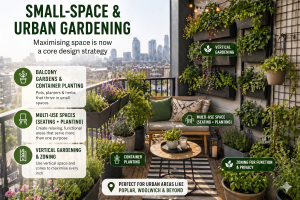
Why Small-Space Gardening Is Booming in London
Urban living has transformed outdoor design priorities. With rising property prices and smaller outdoor areas, traditional garden layouts are no longer practical.
Instead, small-space gardening focuses on:
- Maximising usable space without overcrowding
- Creating functional outdoor living areas
- Combining relaxation, planting, and storage
- Enhancing privacy in densely built environments
- Designing low-maintenance, high-impact spaces
This shift has made urban gardening not just a necessity, but a design opportunity.
Balcony Gardens: Turning Compact Spaces into Green Retreats
Balconies are often underutilised, yet they offer enormous potential when designed correctly. Even the smallest balcony can be transformed into a lush, functional garden.
Key Elements of a Successful Balcony Garden
- Use railing planters to free up floor space
- Incorporate lightweight pots for flexibility
- Choose compact or dwarf plant varieties
- Add foldable furniture to maximise usability
- Introduce layered planting for depth and interest
Balcony gardens work best when every element serves more than one purpose—both aesthetically and practically.
Best Plants for Balcony Gardening
- Herbs such as basil, mint, and parsley
- Compact vegetables like cherry tomatoes and peppers
- Climbing plants for vertical coverage
- Evergreen shrubs for year-round structure
- Pollinator-friendly flowers for biodiversity
Benefits of Balcony Gardening
- Transforms unused space into a functional area
- Improves air quality and wellbeing
- Provides fresh herbs and produce
- Enhances property appeal
- Creates a private outdoor retreat
Container Planting: Flexibility Meets Efficiency
Container gardening is essential for urban environments where soil access may be limited or nonexistent. It allows complete control over plant placement, soil quality, and design.
Why Container Planting Works in Small Spaces
- Portable and adaptable layout
- Ideal for renters and temporary setups
- Enables precise watering and maintenance
- Works on balconies, patios, and rooftops
- Allows creative design combinations
Choosing the Right Containers
- Use vertical stackable pots to save space
- Select materials like terracotta or lightweight composites
- Ensure proper drainage to prevent waterlogging
- Mix sizes and heights to create visual layers
Smart Container Grouping
Group plants based on similar needs:
- Sun-loving plants together
- Shade-tolerant plants in sheltered zones
- Herbs in easily accessible areas
- Decorative plants in focal positions
This improves both plant health and overall design efficiency.
Multi-Use Spaces: Combining Seating and Planting
In small urban gardens, space must work harder. One of the most effective strategies is designing multi-functional areas that combine seating, storage, and planting.
Examples of Multi-Use Garden Features
- Built-in benches with integrated planters
- Storage seating that doubles as a garden feature
- Foldable furniture for flexible layouts
- Raised beds that act as borders and seating edges
These solutions eliminate wasted space while enhancing usability.
Benefits of Multi-Use Design
- Maximises limited space
- Reduces clutter
- Improves functionality
- Creates a cohesive design
- Enhances comfort and usability
Vertical Gardening: The Key to Unlocking Hidden Space
When horizontal space is limited, the only way is up. Vertical gardening is one of the most powerful techniques in modern urban design.
Popular Vertical Gardening Solutions
- Living walls or green walls
- Wall-mounted planters
- Trellises for climbing plants
- Hanging baskets and tiered systems
- Shelving units with integrated planting
Best Plants for Vertical Gardens
- Climbing plants such as ivy and jasmine
- Strawberries and trailing herbs
- Ferns and shade-tolerant greenery
- Compact flowering plants
Vertical gardening not only increases planting capacity but also creates a striking visual feature.
Zoning: Creating Structure in Small Gardens
Zoning is essential in small-space gardening. It involves dividing a limited area into distinct functional zones without making it feel cramped.
Common Garden Zones
- Relaxation zone (seating area)
- Planting zone (containers or beds)
- Utility zone (storage or tools)
- Privacy zone (screens or vertical planting)
How to Create Effective Zones
- Use planters or screens as natural dividers
- Vary flooring materials to define spaces
- Position furniture strategically
- Use lighting to highlight different areas
Zoning brings order and clarity, making even the smallest garden feel larger and more organised.
Maximising Light and Space Perception
Light plays a critical role in small garden design. A well-lit space feels larger, more open, and more inviting.
Techniques to Enhance Light and Space
- Use mirrors to reflect light and create depth
- Choose light-coloured surfaces and materials
- Keep layouts open and uncluttered
- Position plants to avoid blocking natural light
- Use glass or open structures instead of solid barriers
These techniques create the illusion of a larger, more expansive space.
Low-Maintenance Solutions for Busy Urban Living
Urban lifestyles demand gardens that are easy to maintain. Low-maintenance design ensures the space remains functional without constant upkeep.
Key Low-Maintenance Strategies
- Choose hardy, resilient plants
- Install drip irrigation systems
- Use self-watering containers
- Minimise lawn areas
- Incorporate evergreen plants for year-round structure
Benefits of Low-Maintenance Gardening
- Saves time and effort
- Reduces ongoing costs
- Ensures consistent appearance
- Minimises plant loss
- Supports long-term sustainability
Privacy Solutions for Urban Gardens
Privacy is a major concern in densely populated areas. Smart design can create a secluded environment without sacrificing space.
Effective Privacy Features
- Vertical planting walls
- Bamboo or wooden screens
- Trellises with climbing plants
- Outdoor curtains or fabric panels
- Strategic plant placement
These solutions provide privacy while enhancing the overall design.
The Future of Urban Gardening: Smart, Flexible, Efficient
Small-space gardening is no longer about compromise—it is about optimisation. Every design choice is intentional, every feature has a purpose, and every inch is maximised.
The future of urban gardening focuses on:
- Flexible layouts that adapt to changing needs
- Multi-functional design elements
- Sustainable, low-resource solutions
- Creative use of vertical and hidden space
This approach transforms even the smallest outdoor area into a highly functional and visually impressive environment.
Final Thoughts: Small Space, Big Potential
Small-space and urban gardening represents one of the most significant design shifts in modern outdoor living—particularly in cities like London, where space is limited but demand for quality outdoor areas is high.
By combining balcony gardening, container planting, vertical design, and smart zoning, it is possible to create a garden that feels spacious, functional, and inviting.
The key principle is simple: maximise space, maximise function, and maximise impact.
Even the smallest garden can deliver exceptional results when designed with precision and purpose.
Recent Posts
- Garden Maintenance Packages in Poplar, London: Weekly & Monthly Garden Care
- Low-Maintenance Hedge Trimming & Bush Shaping – Garden Care Guide 2026
- Edible Gardens in London: Foodscaping & Grazing Garden Design for Modern Urban Living
- Garden Clearance & Restoration in Poplar, London: Transforming Overgrown Urban Gardens into Usable Outdoor Spaces
- Small Patio Transformation in Dense Urban Areas Like Poplar